In today’s fast-paced world, where we are constantly connected to devices and disconnected from nature, more and more people are turning to the simple yet powerful practice of grounding. This ancient practice, which reconnects our bodies with the Earth’s energy, is proving to be a key path to inner balance and health. In this article, we explore what grounding really is, how it affects our well-being, and why it is becoming increasingly important in the modern world.

What Is Grounding?
Grounding, also known as “earthing,” is the practice of connecting the human body to the Earth’s natural energy network. This ancient technique is based on the simple concept of physical contact with the ground, allowing the transfer of negative ions from the Earth’s surface into the body. You can ground yourself indoors using a conductive product, such as a grounding mat or sheet, or outdoors in nature. Studies have shown that grounding improves sleep and mood and reduces muscle damage and pain.
How Does Grounding Work?
The Earth’s surface is rich in free electrons, giving the ground we walk on (including lakes and oceans) a natural negative charge. When we touch the ground, the static electricity and environmental charges that have accumulated on our body dissipate. At the same time, we absorb energy in the form of free electrons, aligning our body with the Earth’s frequencies. The Earth’s negative charge helps create a stable internal bioelectrical environment for the body, supporting the normal functioning of bodily systems such as our biological clock and cortisol regulation.
What Does Science Say?
Research has shown that grounding has fascinating effects on physiology and health. These effects are associated with reduced inflammation (inflammation is linked to most diseases), improved immune responses, faster wound healing, and the prevention and treatment of chronic inflammatory and autoimmune conditions. Grounding and its health benefits have been present for millennia in Traditional Chinese Medicine, Aboriginal practices, and indigenous communities. Even our grandparents and great-grandparents often walked barefoot. In the 19th century, German scientists began recommending barefoot walking for health benefits. Beyond legends and anecdotal evidence, an increasing number of studies support and explore grounding’s potential health benefits—39 scientific papers have already been published on the topic, and the full list can be found here: https://earthinginstitute.net/research/
Some of the studied health benefits of grounding include:
- improved mood,
- increased heart rate variability,
- better blood flow,
- improved immune system function (including white blood cell count and cytokine levels),
- reduced post-exercise pain,
- improved sleep quality (deeper and more restorative sleep),
- reduced inflammation,
- lower stress levels,
- faster wound healing,
- better overall physical function and energy,
- reduced fatigue and drowsiness.
The Book “Earthing – The Most Important Health Discovery Ever!”
There is a book called Earthing – The Most Important Health Discovery Ever, that you can order or Amazon and elsewhere.
In the book you can find detailed information on how grounding works, doctors’ experiences around the world, and scientific research.

Grounding in Elite Sports
Given its many benefits, it’s no surprise that top athletes use grounding. Cyclists in the Tour de France often practice grounding to accelerate recovery and healing after injuries. Grounding helps reduce inflammation, which is key for easing post-race pain. By using grounding tools, athletes experience faster muscle recovery, which allows them to perform better in each stage. This practice also supports optimal blood circulation, essential for maintaining peak physical condition during competition. Systematic grounding has become an indispensable part of preparation for athletes seeking to leverage this natural therapy for top performance.
Grounding is also publicly endorsed by Chris Lieto, three-time Ironman champion, and Michael Sandler, author of Barefoot Running and Barefoot Walking. Beyond athletes, grounding is becoming a regular practice among medical doctors and holistic health practitioners worldwide.
How to Ground Yourself
To achieve the best results, it is important to ground yourself whenever possible. Here are a few easy ways to do it:
Grounding in Nature:
- Walking barefoot: The simplest way to ground yourself is to walk barefoot on grass, sand, or soil, allowing direct contact with the earth.

- Sitting on the ground: Simply sitting on the earth or grass allows your body to connect with the Earth’s natural energy field.
- Nature outings: Spending time in nature, going for walks or hikes.
- Walking on stones: Rocky surfaces are a great natural grounding medium.
- Gardening: Working with soil allows direct contact with the earth and its benefits.
- Swimming in the sea: Seawater is an excellent conductor, making swimming an effective grounding practice.
- Meditation outdoors: Meditating on the ground, especially on grass or soil, helps release excess charge and promotes calm.
Grounding Indoors:
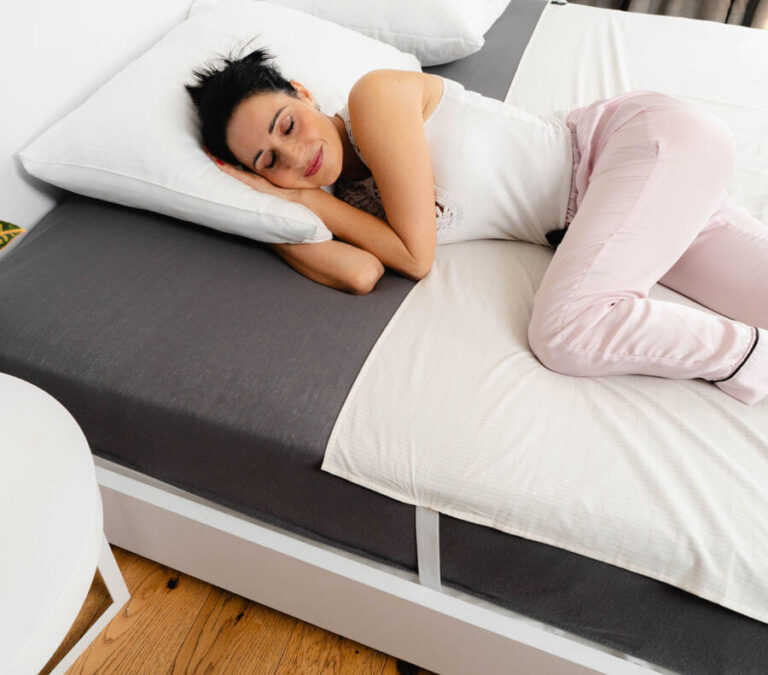
- Grounding sheets: Special grounding sheets connected to a grounded outlet allow you to stay grounded while you sleep.
- Grounding mats: These can be placed on a chair or floor to ground yourself while working or relaxing indoors.
- Other grounding products include pillowcases, car seat pads, blankets, patches, socks, and yoga mats.

Grounding is a simple yet powerful practice for improving overall well-being. Making grounding a regular part of your lifestyle can bring numerous benefits for both physical and mental health. Through this easy practice, we can reconnect with the Earth and significantly improve our quality of life.
If you’d like to learn more about grounding, check out this documentary: